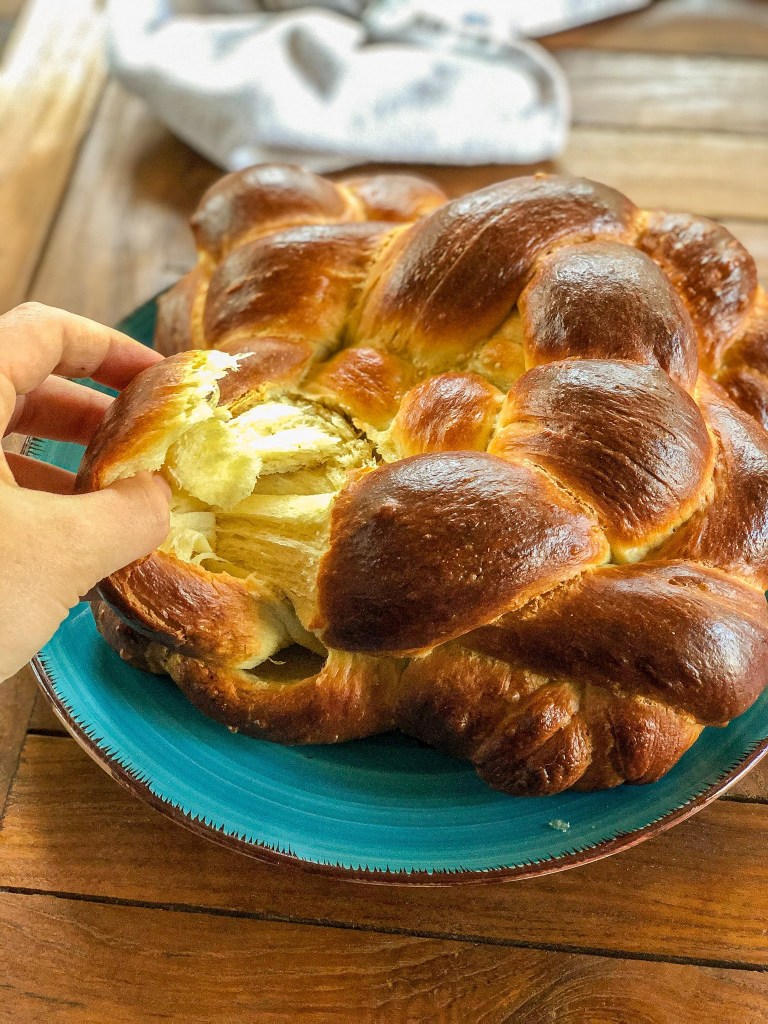
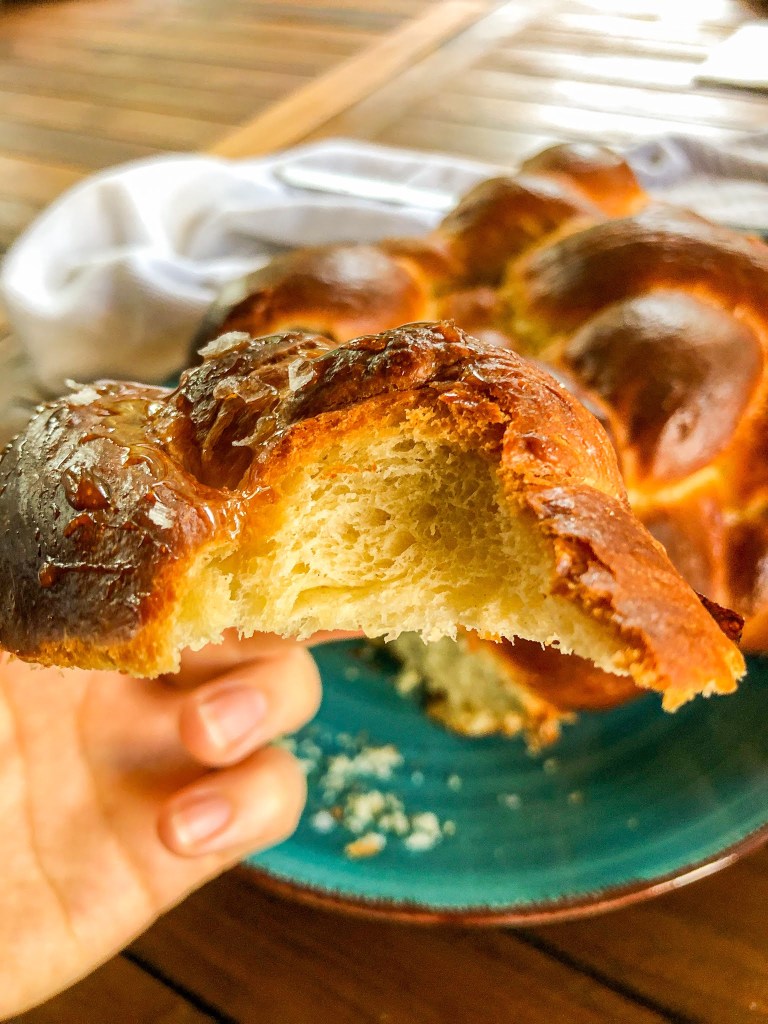
“Nothing compares to freshly baked challah bread, and this one’s the best loaf I have made so far. For those of you intimidated by baking or challah making beginners, let me tell you, I spent several days testing and perfecting this recipe. I can assure you that this recipe is guaranteed to give you a full stomach and happy heart, if you follow all the steps.”
– Carolina Gelen
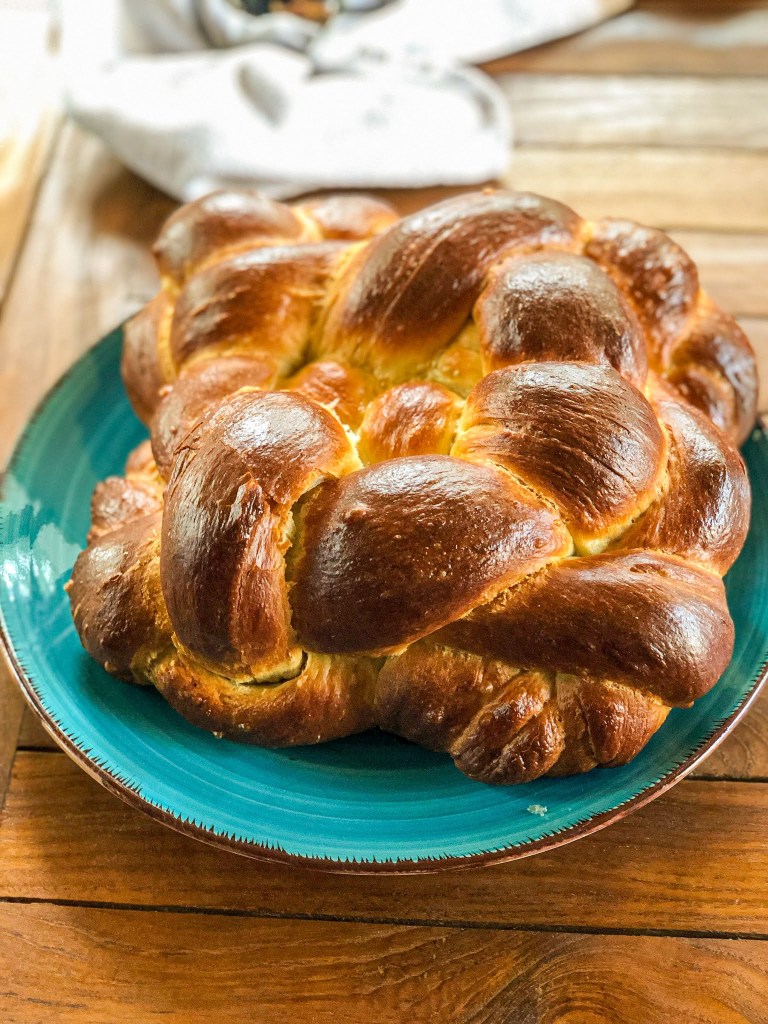
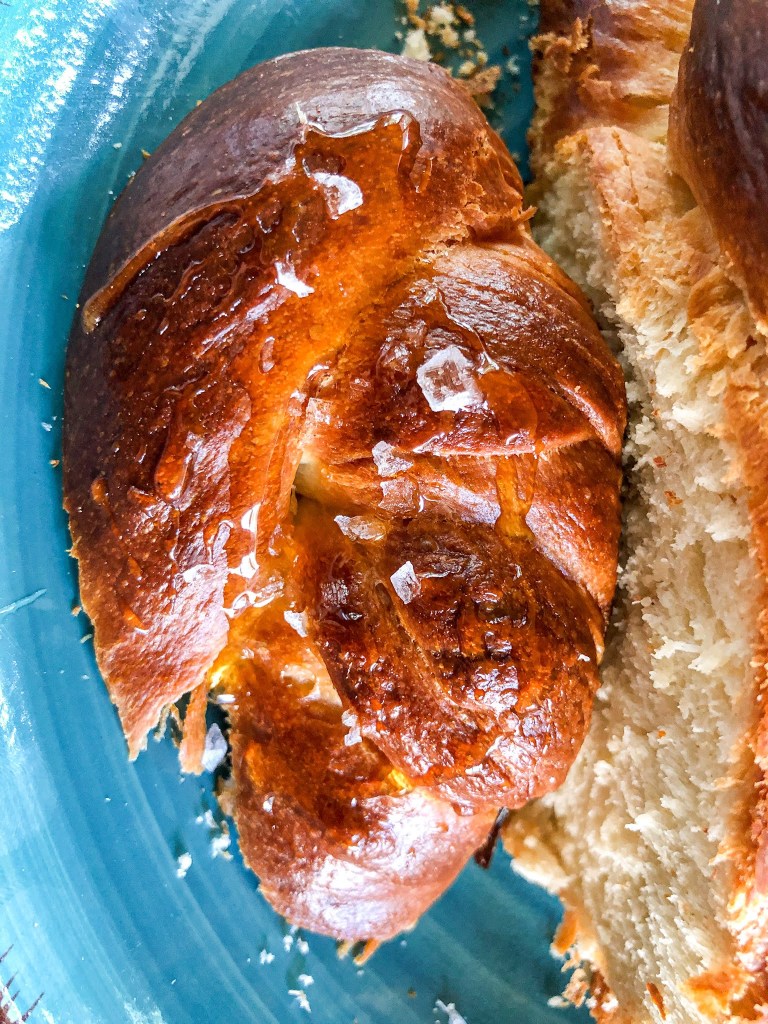
I decided to make a Challah loaf this September for Rosh Hashanah because I’ve always wanted to, and what better time than the present day quarantine reality! I did a lot of research before making this bread. A passive two weeks worth of research. I discovered different posts that discussed the best sheen results (egg was, vs aquafaba, vs honey and more [the egg wash looked the best, trust me]). I discovered it is important to get the first and second egg wash in all of the nooks and crannies to insure there is maximum color is added to the loaf. I also discovered it doesn’t matter if you use all-purpose or bread flour! After making this bread and being so successful the first time, I can promise you that you will be too. Just follow the recipe and you’ll knock it out of the park.
See below for some things to note when making this bread.
I consulted two different recipes to make this loaf a reality. I knew I wanted to use honey instead of sugar, and I also knew I wanted to use olive oil instead of vegetable oil. I didn’t find any recipes that used both of these ingredients as most called for granulated sugar and vegetable oil. I wanted to use Melissa Clark’s Olive Oil Challah but didn’t have any oranges, so I followed Carolina Gelen’s recipe. When comparing the recipes they are not that different. So I forged my own path.
I followed all of the weighted measurements of Carolina Gelen’s recipe except swapped the sugar for honey and vegetable oil for olive oil. I kept the weights the same as is called for in the recipe.
In my research for baking Challah, I came across a technique most chef’s were doing and that was a double egg wash. Once I finished braiding the dough, I carefully added an egg wash. Then I let the braided dough rise for 30 minutes, and before placing in the oven, added the second egg wash. The only thing to note is that I attempted to test if the dough was done proving by making an indent, but the first egg wash became so sticky that I could never get the indent to happen.
Melissa Clark’s recipe called for the bread to be baked at 375 for 25-35 minutes. I did bake it at 375 and had to leave it in closer to the 35 minute mark. To determine if the loaf was done baking, I temp checked for 209 degrees as well as tapped to see if it made a hollow sound. Both happened!
Enjoy!
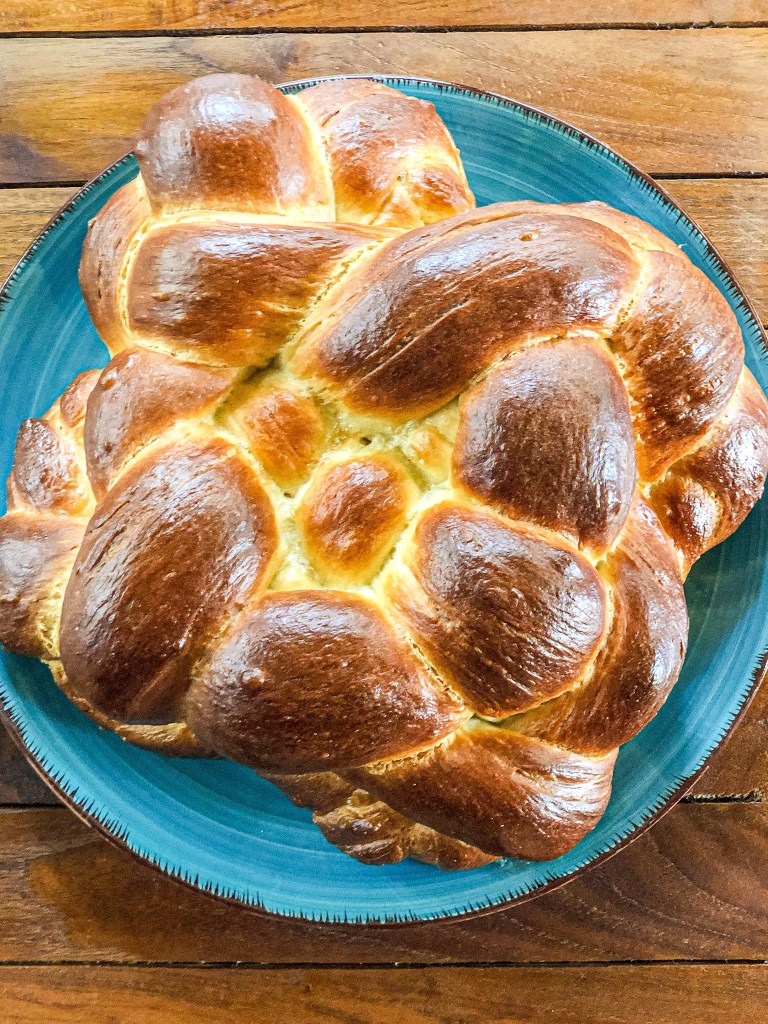
Olive Oil Challah Bread
INGREDIENTS
- 20-25 grams fresh yeast or 7 grams active dry / instant yeast
- 125 grams lukewarm water
- 50 grams sugar (I used honey)
- 70 grams neutral oil (I used olive oil)
- such as sunflower seed oil, grape seed oil, vegetable oil, canola oil, etc.
- 3 eggs
- 2 whole eggs
- 1 separated egg
- 1 egg yolk for the dough
- 1 egg white for our egg wash
- 10 grams salt
- 500 grams bread or all purpose flour (I used bread flour)
INSTRUCTIONS
In a bowl, mix the yeast, lukewarm water and sugar together until the yeast has dissolved.
Note: If you are using dry yeast, make sure it is still active by letting it sit in the water for 5 minutes once mixed. If the mixture becomes slightly foamy, it’s active, otherwise, try another sachet of yeast.
Next, add the oil, 2 whole eggs and 1 egg yolk to the bowl and mix until the sugar has dissolved and everything is well incorporated.
Add the flour and salt to the liquid batter and mix until the flour has fully hydrated (until there are no visible dry spots). If your dough still feels a bit too dry and hard to knead, don’t be afraid of adding a couple more tablespoons of water to it. The hydration of the dough depends on the size of the eggs you are using and other external variables like the environment you are in and the humidity of the air. Therefore, trust your gut, add some more water if necessary and start kneading! You will see that the dough will start to clean the sides of the bowl while you mix it.
Once everything is incorporated, it’s time to knead our dough, this will encourage the gluten development in our dough which will give structure to our challah loaf.
It took may take about 5-7 minutes of kneading by hand to get to the perfectly smooth dough texture.
If you are adding any other ingredients like raisins, chocolate chips or nuts, now is the time to add them to the dough and incorporate them as well. No need for them to participate in the whole kneading process, just add them once you are done kneading the dough.
Shape the dough into a ball and place it in a lightly greased bowl.
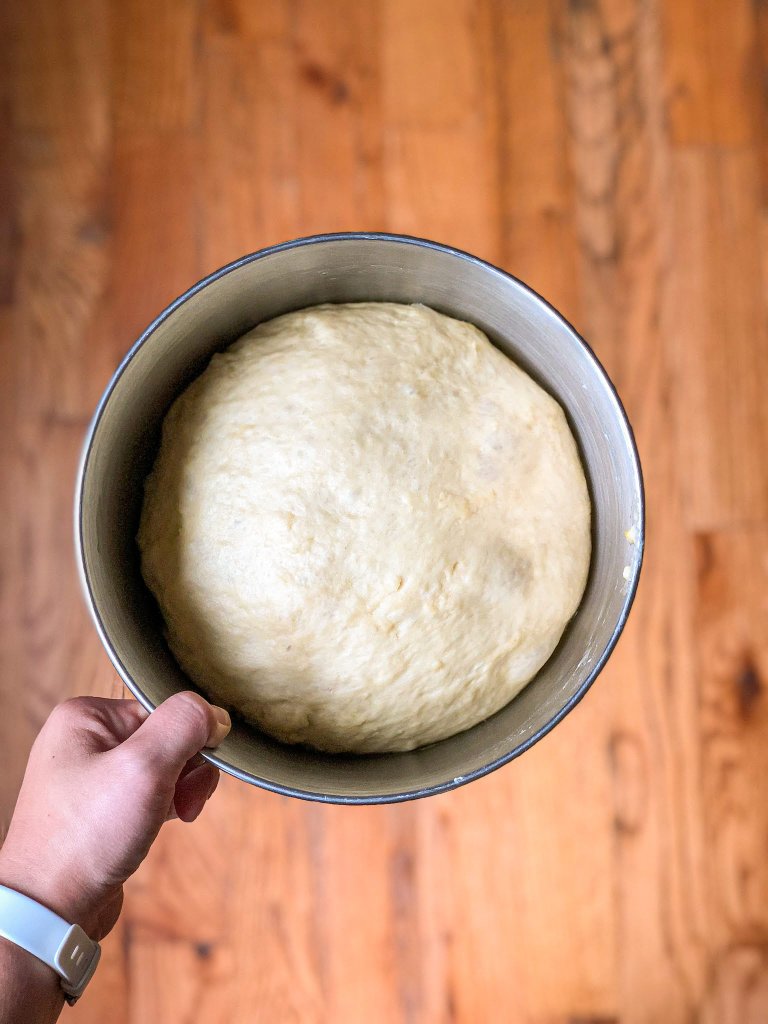
Cover the bowl and let the dough rest and proof for about 1 hour at 26°C (78°F) – it will take less or more time depending on the temperature of the room. The dough should feel light, airy and it should have doubled in size.
Do not rush this step, if you underproof your dough, the challah will come out dense and chewy.
Once the dough is done proofing (once it has doubled in size), take it out, place it on a wooden board or directly on the table and flatten it out.
After that, divide the dough into how ever many strands you would like to braid it in – 3, 4, 5, 6, 7, etc. You can eyeball the division of the dough or weigh the whole dough first, and then weigh each piece of dough to make sure they are all equal in weight.
Next, shape each piece of dough as shown in the photos down below, this will ensure an even, smooth, less crusty finish of the dough. Grease your hands or the surface you are working on with some more oil if necessary.
Roll out each individual piece of dough into a strand.
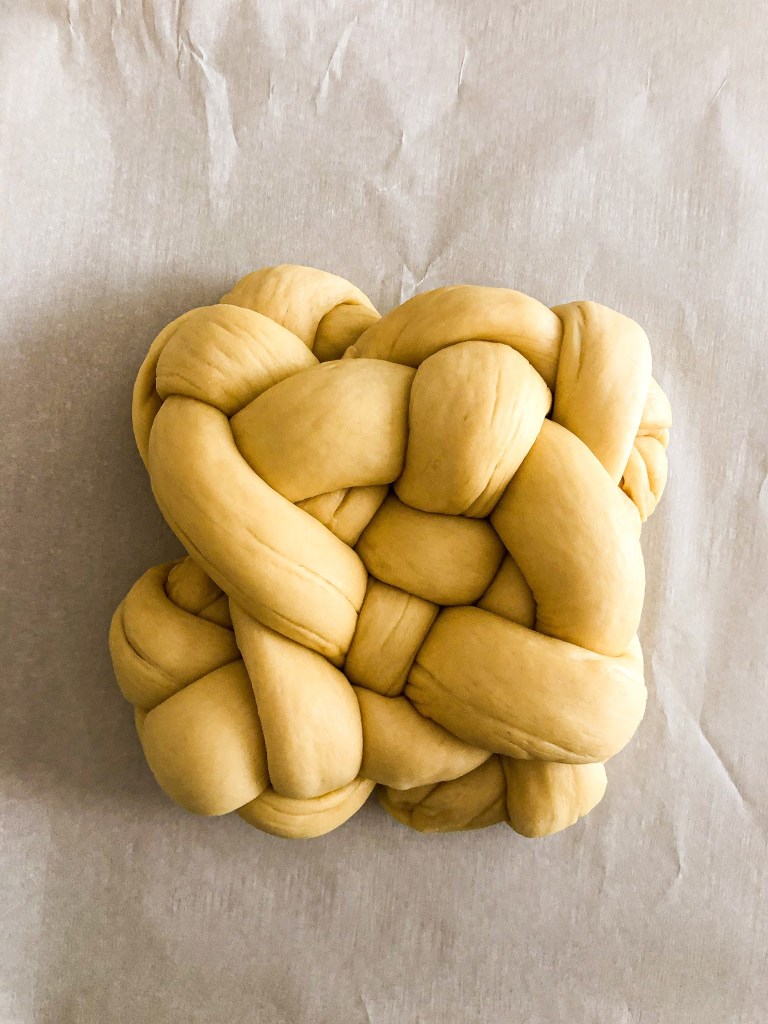
Pinch all the strands of dough together and braid as you please. Try to keep the braiding a bit loose to allow the dough to rise without bursting and snapping once it is in the oven, baking.
Keep in mind you will want to preheat your oven at 200°C (390°F) 7-10 minutes before adding your loaf in.
Place your dough onto a flat baking tray lined with parchment paper or into a loaf tin and cover the dough with a clean towel or saran wrap.
Allow the dough to rise again for 20-30 minutes at 26°C (78°F) – again, it will take less or more time depending on the temperature of the room. Again, do not rush the process, the dough needs time to rise and become light and airy after we worked it out once again.
You will know the dough is done proofing when once you gently poke the dough with your finger, it will leave an indent and not spring back.
You can absolutely use a regular egg wash – a whole egg plus a tablespoon of water. I preferred to use the leftover egg white as my egg wash, as you usually use 1/4 of the egg wash you’d make anyways.
Lightly brush the egg white on top of the challah before adding the dough into the oven if you like a deeper, darker colour. If you are topping the challah with any seeds or nuts or salt, now is the time to sprinkle it on top of the loaf, once the egg wash is on.
Pop the challah loaf in the oven for 25-30 minutes, until golden, amber brown.
Note: Try to keep an eye on the challah loaf, once it is in the oven. You know your oven the best, so you will probably anticipate its behavior in this scenario. For example, I know my oven tends to burn the right side of the loaf, so half way through the baking process, I pull out the challah and turn it 180° so the other side will bake evenly as well.
It’s time to eat, enjoy!
Let me know how the recipe turned out for you in the comments below!
 Trial & Eggs